

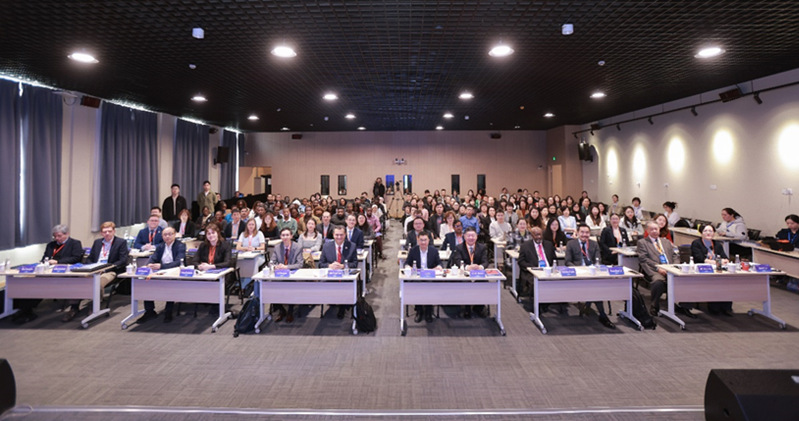
From November 15 to 16, 2025, the 5th Global Teacher Development Forum was held at the UNESCO Teacher Education Centre (TEC). With the theme "Teaching in Transformation: Demands and Expectations," the forum combined on-site participation and online live streaming, attracting over 1,000 teachers and students from universities at home and abroad.
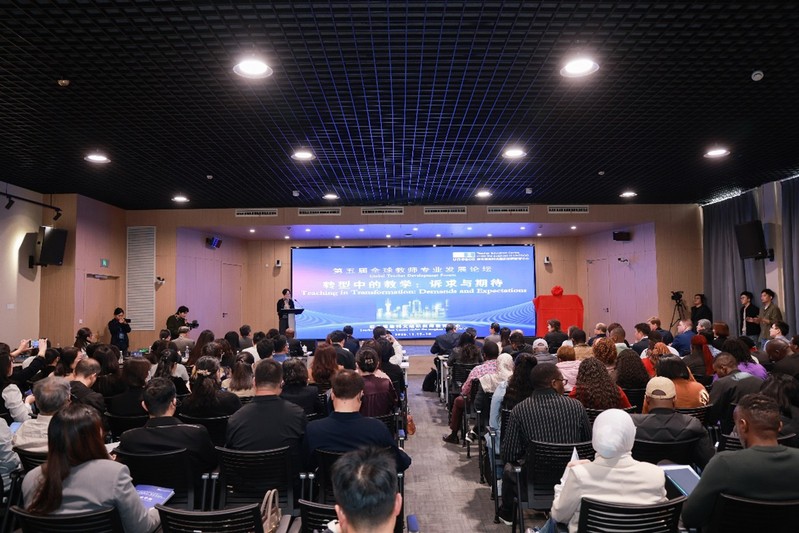
Getachew Engida, Former Deputy Director-General of UNESCO; Andreas Schleicher, Director of the Directorate for Education and Skills at the OECD; Carlos Vargas Tames, Head of the International Task Force on Teachers for Education 2030; and dozens of experts and scholars from Austria, Germany, Israel, South Korea, the United Kingdom, the United States, and China shared insights at the event. The forum was hosted by Associate Professor Bian Cui.
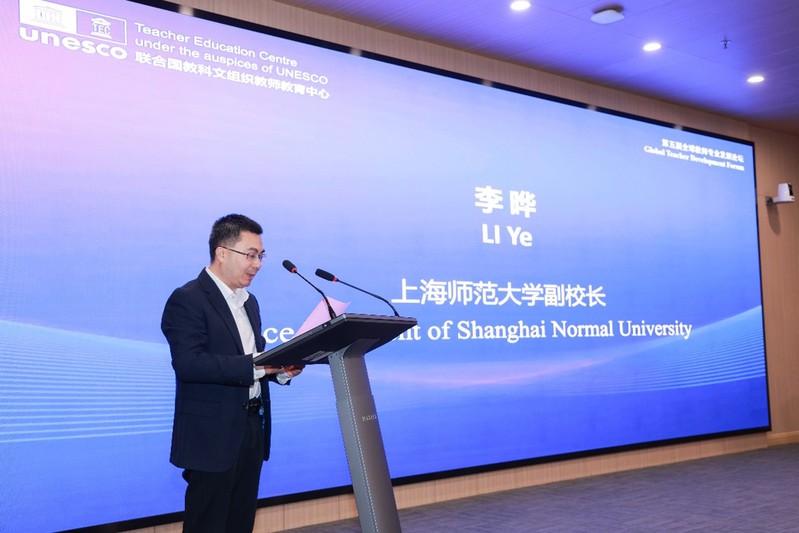
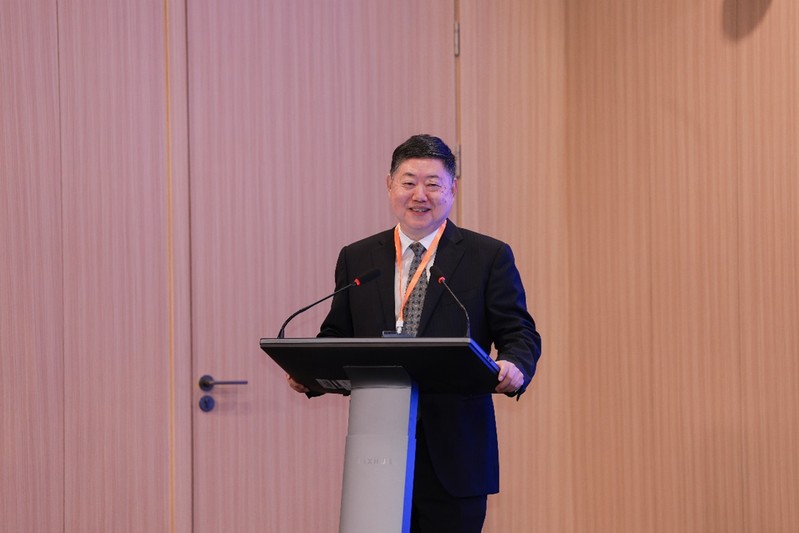
Li Ye, Vice President of Shanghai Normal University (SHNU); Zhang Minxuan, Director of TEC; and Xiao Shengxiong, Director of the International Affairs Office of SHNU, attended the opening ceremony.
In his opening speech, Vice President Li Ye first extended a warm welcome to all participants on behalf of SHNU. He then introduced the university’s explorations in reshaping new paradigms of teacher training with intelligent technology, building a new interdisciplinary teaching ecology through STEM integration, and expanding new paths for teacher development with a global perspective.
Director Zhang Minxuan welcomed the experts and scholars, using the metaphor of "harvesting in autumn and storing for winter" to emphasize that the forum is both a "harvest season" for sharing insights and a starting point for accumulating strength for future educational actions. He urged global educators to "reflect deeply and act boldly" to translate ideas into practice.
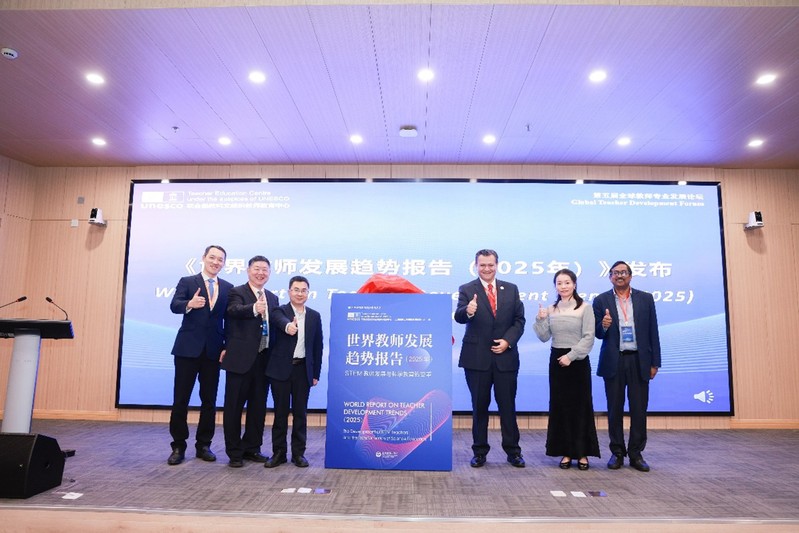
Witnessed by all participants, the World Report on Teacher Developemt Trends (2025) was officially released. Research Fellow Li Tingzhou from TEC briefly introduced the report, which systematically sorts out and summarizes the global landscape of teacher development and five key trends. It focuses on STEM teacher professional development and relevant policy practices in multiple countries, providing a reference for building a more resilient global teacher development system.
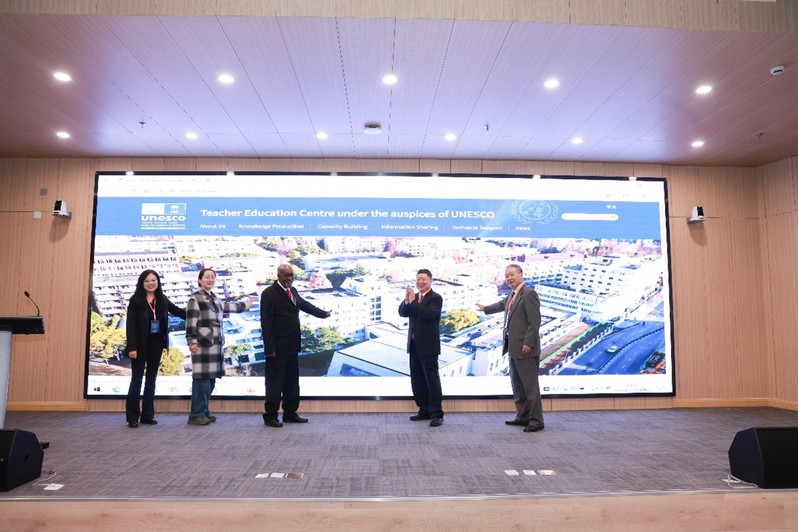
Subsequently, TEC’s English-language official website was announced online. Associate Professor Yan Wenle thanked all members involved in the website construction, stating that the website will link with international platforms and serve as a new window for TEC to expand international cooperation and promote knowledge sharing.
With the launch of these two achievements, the 5th Global Teacher Development Forum officially kicked off. In the keynote speech session, four experts from home and abroad explored the reshaping of teachers’ roles and professional development paths amid educational transformation from diverse perspectives.
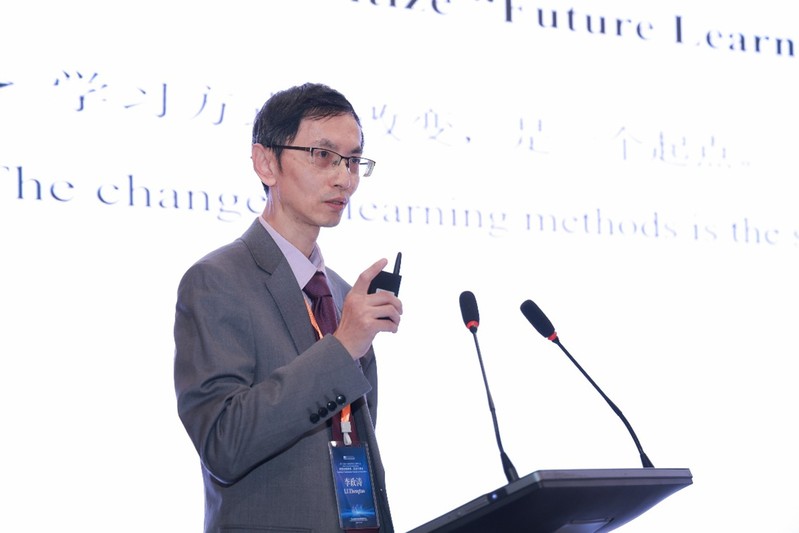
Professor Li Zhengtao, Director of the National Training Center for Secondary School Principals and Professor at East China Normal University, delivered a keynote speech titled "From Learning Futures to Teaching Futures: Charting the Course for Future Educators." He pointed out that the transformation of learning methods is the logical starting point of educational transformation, and future teaching will move towards "collaboration between human and AI teachers," "integrated teaching," and "symbiosis of five educations" (moral, intellectual, physical, aesthetic, and labor education). Therefore, future teachers need to possess two core competencies—"integration and transformation" and "interactive education"—to become "leaders with educator spirit."
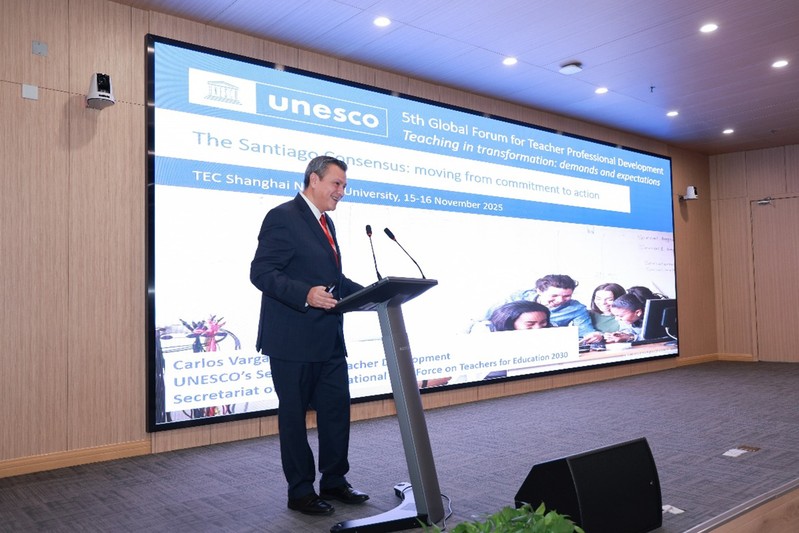
Carlos Vargas Tames, Head of the International Task Force on Teachers for Education 2030, delivered a speech titled "The Santiago Consensus: Moving from Commitment to Action." He shared five key words for implementing the consensus—Collaboration, Connection, Conditions, Coordination, and Commitment—and called on countries to increase educational investment, improve teachers’ working conditions, and especially attach importance to teachers’ voice in educational decision-making.
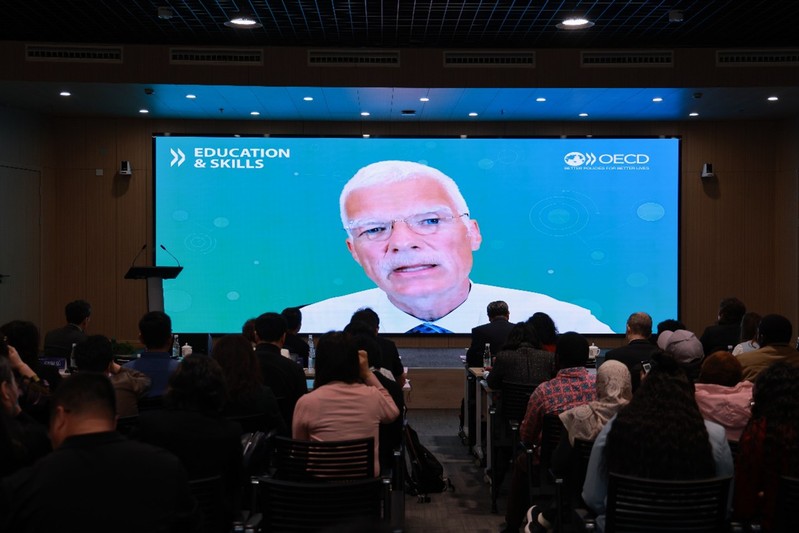
Andreas Schleicher, Director of the Directorate for Education and Skills at the OECD, focused on the theme "Global Trends—Teaching in Transformation." He argued that artificial intelligence will reshape teaching and learning methods, but teachers’ emotional companionship and deep reasoning abilities are irreplaceable. He emphasized that teachers should make good use of AI to improve teaching efficiency, while cautioning against students’ over-reliance on electronic devices. Based on PISA data, he also proposed that education should go beyond academic performance, focus on cultivating students’ well-being and resilience, and enhance teachers’ professional satisfaction by reducing non-teaching burdens.
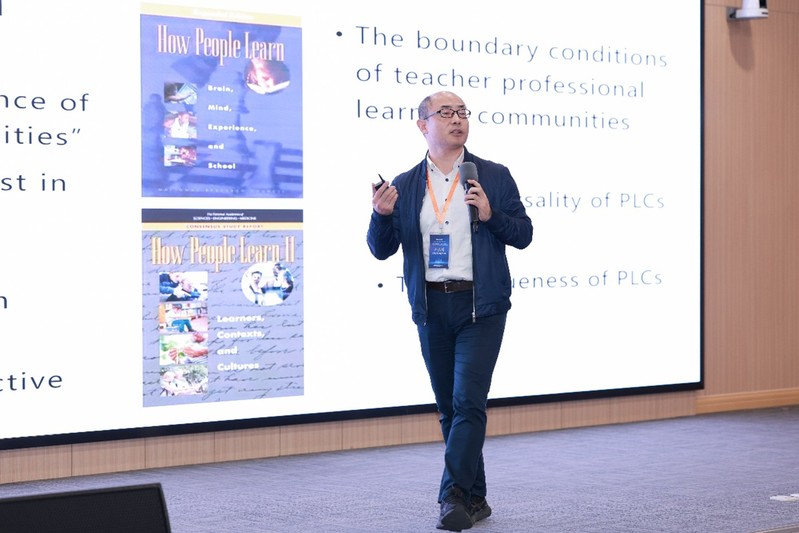
Professor Yin Hongbiao, Head of the Department of Curriculum and Instruction at the Faculty of Education, the Chinese University of Hong Kong, delivered a report titled Conceptualizing Teacher Professional Learning Communities in Chinese Schools." He pointed out that mechanisms such as teaching research groups and master teacher studios in Chinese schools form a unique teacher cooperation ecology, and China’s teacher professional learning communities lie between "administratively arranged cooperation" and "autonomous in-depth collaboration." He suggested that research and practice should prioritize "quality over quantity" and "substance over form," adopt international experience "critically," and promote the real development of teacher communities by strengthening professional leadership and fostering an open dialogue culture.
On the afternoon of November 15, three roundtable forums focusing on cutting-edge educational issues were held consecutively, with more than a dozen scholars from home and abroad conducting in-depth cross-regional and interdisciplinary dialogues on four topics, featuring frequent interactions and a lively atmosphere.
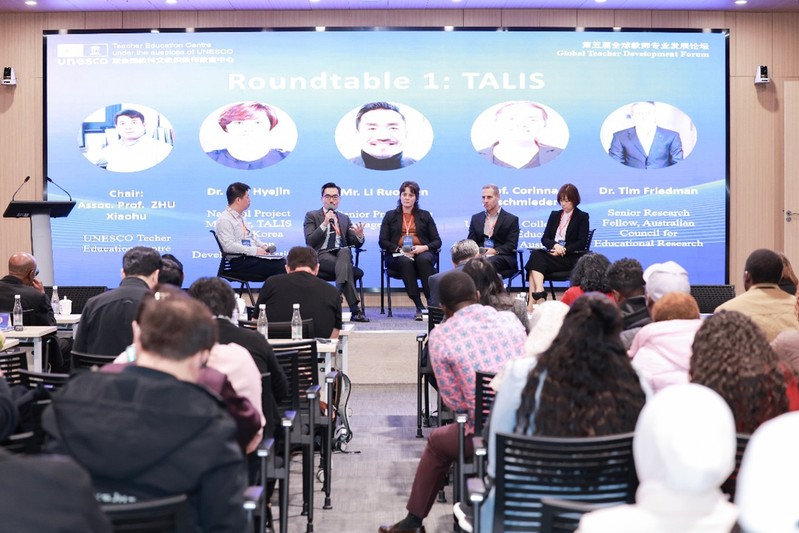
TALIS Roundtable
Hosted by Associate Professor Zhu Xiaohu from TEC, the forum featured Kim Hyejin (National Project Manager, TALIS Korea, Korea Education Development Institute), Ruochen Li (Senior Programme Manager at the OECD), Corinna Koschmieder (University College of Teacher Education Styria, Austria), and Tim Friedman (Senior Research Fellow, Australian Council for Educational Research). The four guests systematically reviewed the original intention and global role of the TALIS survey, shared the goals and results of various countries’ participation in TALIS, discussed trends such as changes in the teacher workforce structure, aging, and gender ratio, and exchanged specific measures taken by governments to enhance young teachers’ willingness to work. In addition, the guests focused on differences in teachers’ attitudes towards AI and analyzed the key impact of policies and training on technology application.
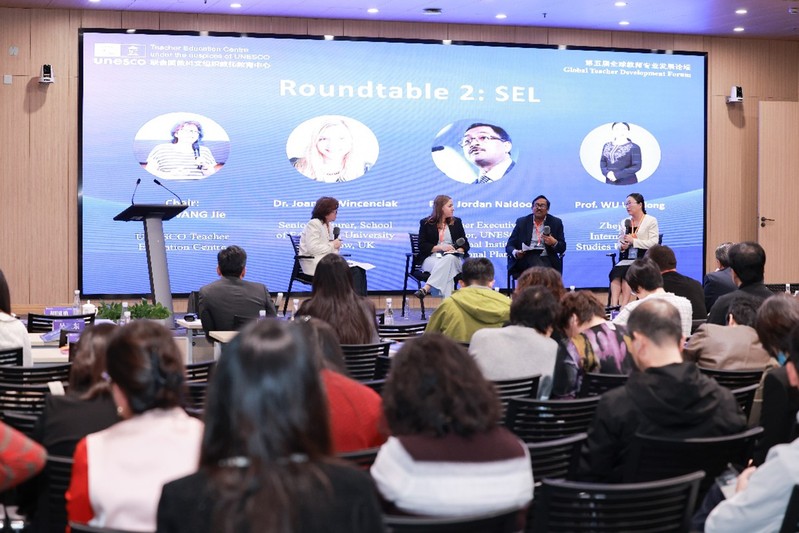
Social and Emotional Learning (SEL) Roundtable
Hosted by Professor Wang Jie from TEC, the forum included Joanna Wincenciak (Senior Lecturer, School of Education, University of Glasgow, UK), Jordan Naidoo (Distinguished Professor at TEC), and Wu Weidong (Professor at Zhejiang International Studies University). They discussed the global challenges faced by teachers and students in social-emotional and mental health. The guests deeply analyzed the inherent connection between social-emotional competence and the future role of teachers, proposing that teachers’ social-emotional literacy should be systematically built from multiple dimensions such as standard-setting, resource support, and evaluation guidance. They also explored how to integrate emotional education into daily teaching in the digital age, reduce teachers’ burdens, and achieve the coordinated development of cognition and emotion.
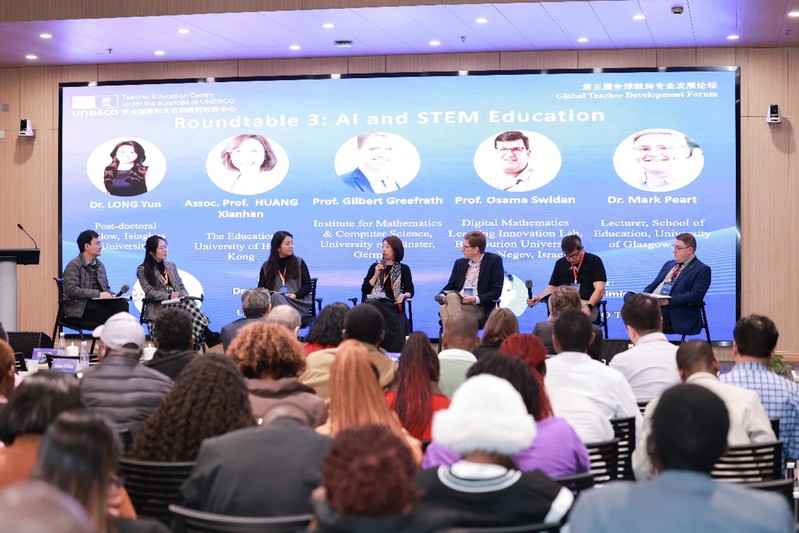
AI in Education & STEM Education Roundtable
Co-hosted by Dr. Ding Ruoxi and Dr. Li Ruimiao from TEC, the forum featured Long Yun (Postdoctoral Fellow, Tsinghua University), Huang Xianhan (Associate Professor, The Education University of Hong Kong), Gilbert Greefrath (Professor at the Institute for Mathematics & Computer Science, University of Münster, Germany), Osama Swidan (Professor at the Digital Mathematics Learning Innovation Lab, Ben-Gurion University of the Negev, Israel), and Mark Peart (Lecturer at the School of Education, University of Glasgow, UK). The five guests debated the reshaping of teachers’ roles by AI, pointing out that teachers are shifting from knowledge transmitters to designers of learning experiences and ethical guides. In terms of STEM education, the guests emphasized the core status of mathematics as a basic discipline in technology integration, explored the potential and limitations of AI in teacher training and curriculum development, and called for attention to critical thinking, cultural adaptability, and ethical responsibility in technology integration.
On November 16, four thematic seminars continued in-depth reports and discussions on the above topics, providing rich theoretical references and practical insights for understanding and promoting the development of global teachers in the era of transformation.
TALIS Thematic Seminar
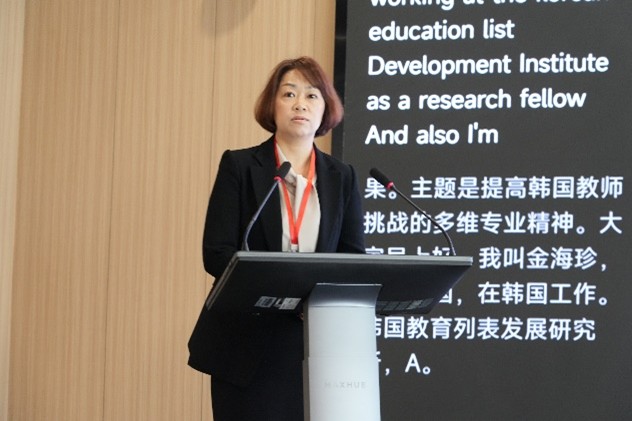
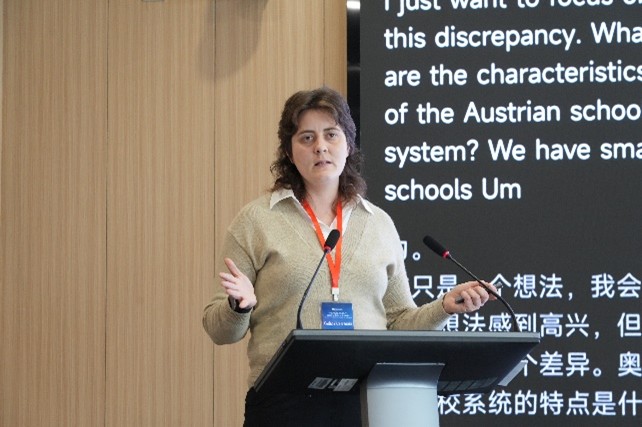
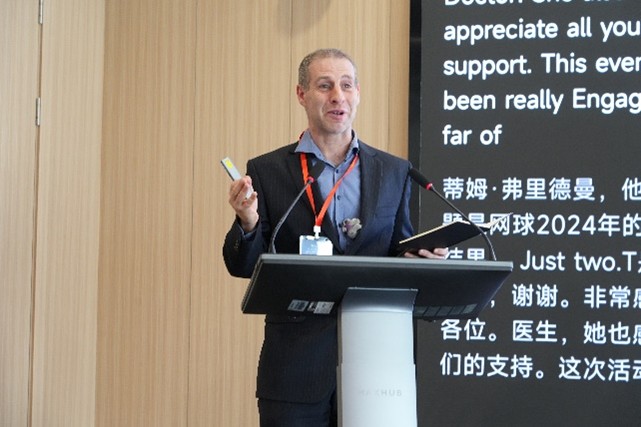
This session presented the core findings of the 2024 global survey. Ruochen Li systematically interpreted the key findings of TALIS 2024 from a global perspective, revealing international trends such as the aging of the teacher workforce, the diversification of classroom student groups, the correlation between AI use and training, and the coexistence of teachers’ work pressure and satisfaction. Dr. Kim Hyejin discussed the challenges faced by South Korean teachers, such as high work intensity and mental health risks, and elaborated on the government’s response through psychological support and administrative burden reduction. Professor Corinna Koschmieder shared Austria’s experience in using TALIS data to promote the implementation of specific reform measures such as teacher recruitment, AI education pilots, and administrative burden reduction. Dr. Tim Friedman introduced Australia’s educational structure, teacher professional development, AI education policies, and performance in this round of TALIS survey, pointing out that Australian teachers are facing challenges such as high work pressure and significant professional turnover intentions.
AI in Education Thematic Seminar
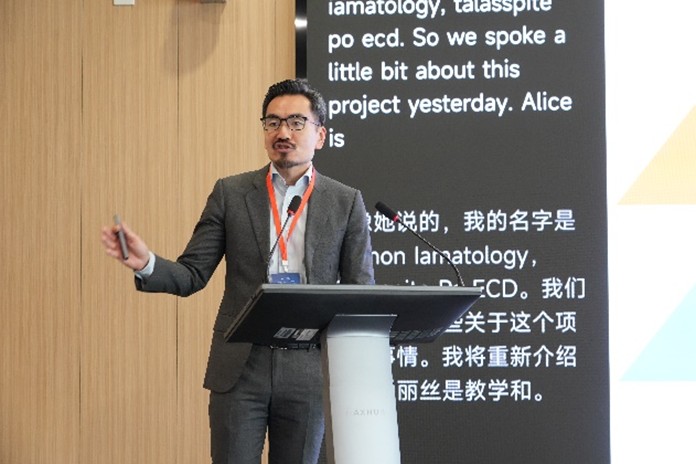
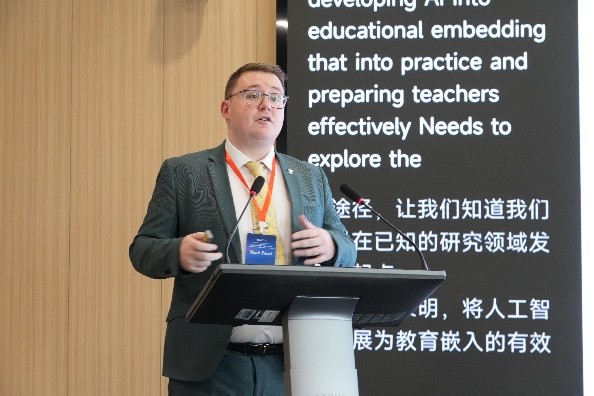
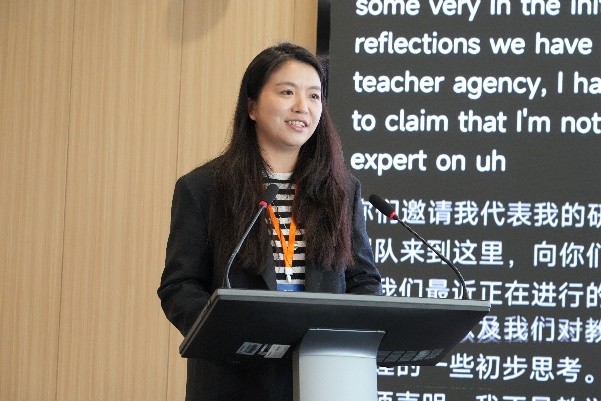
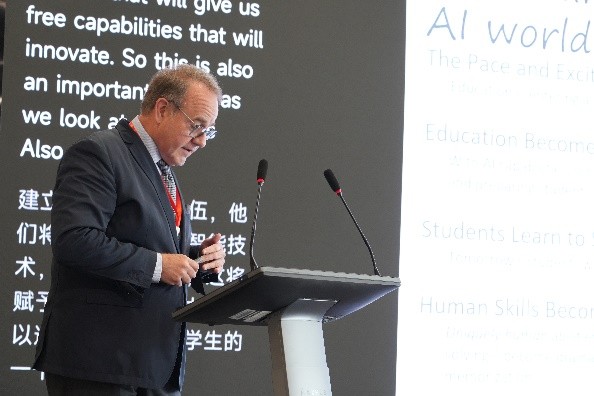
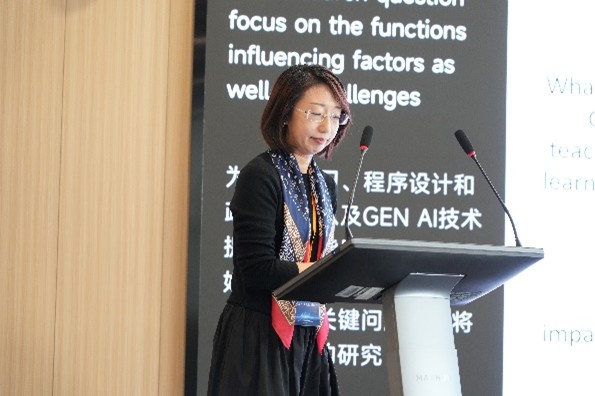
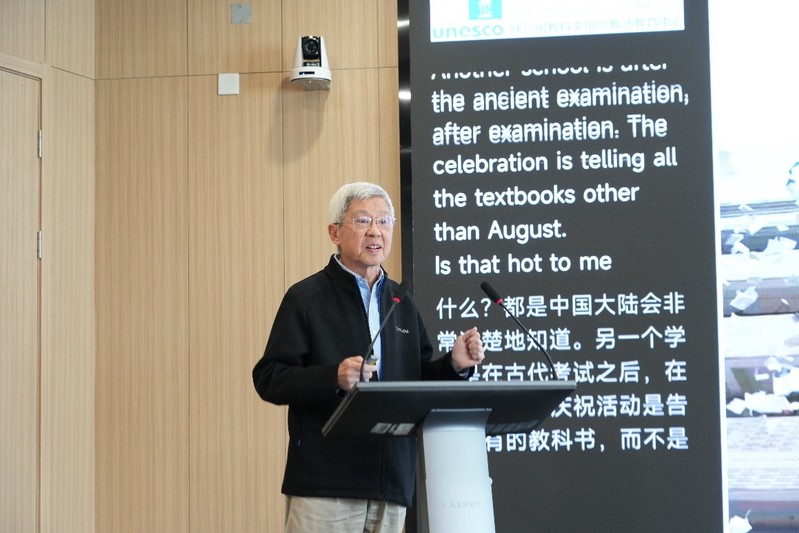
Focusing on teachers’ roles and educational transformation in the AI era, Dr. Mark Peart shared his team’s "reflection toolkit" for teachers, which aims to cultivate teachers’ critical thinking and ethical awareness in integrating digital technology and AI into teaching practice through guiding questions. Dr. Long Yun, combining her AI teaching experiments and classroom dialogue analysis platform practice at Tsinghua University, advocated reshaping teachers’ roles as collaborative designers of AI-enabled classrooms to safeguard teachers’ subjectivity. Professor Tristan Johnson proposed that education should go beyond traditional skills, focusing on using AI to enhance unique human higher-order abilities such as creativity and critical thinking, and even unlock higher potential. Dr. Huang Xianhan summarized the multiple functions of generative AI in teachers’ informal learning and called for future AI tool design to focus more on supporting teachers’ own learning and growth. In his comment, Professor Cheng Kai-ming, Emeritus Professor at the Faculty of Education, the University of Hong Kong, pointed out that education is facing systemic crises such as exam-oriented tendencies, and the application of artificial intelligence must serve the fundamental transformation of education—returning the initiative of learning to students.
STEM Education Thematic Seminar
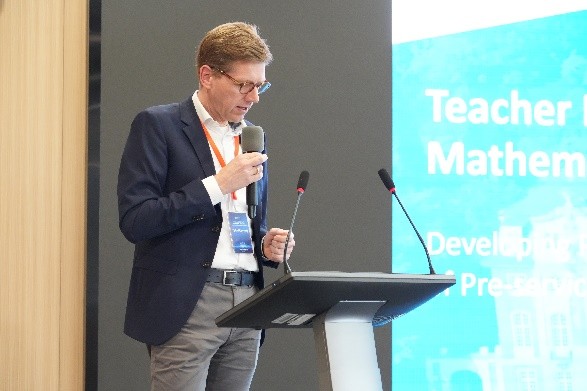
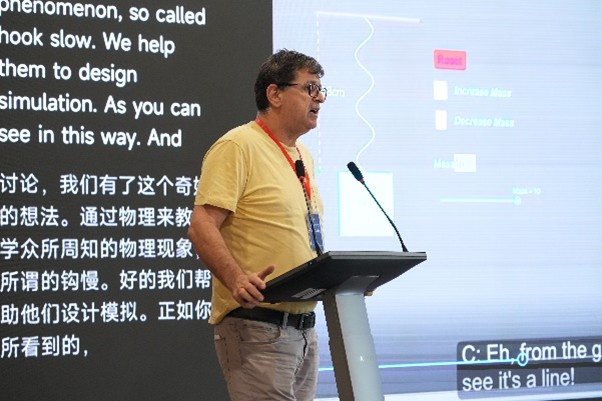
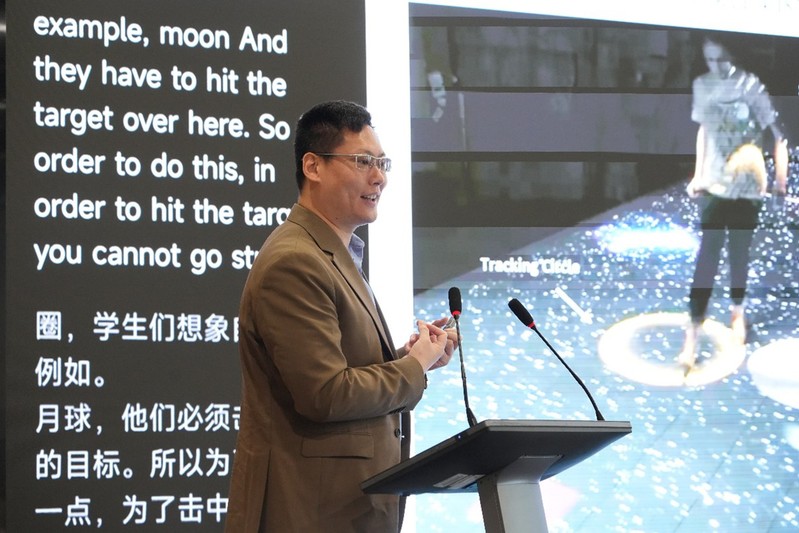
Focusing on digitalization and interdisciplinary integration, Professor Gilbert Greefrath elaborated on the value and practice of mathematical modeling as a path for pre-service teachers’ professional competence development, arguing that technology integration such as using digital tools to support modeling is a key development direction of future teacher education. Professor Osama Swidan, based on a long-term design research on augmented reality-supported physical phenomenon modeling, pointed out that teachers need to possess core competencies such as design thinking, interdisciplinary collaboration, and reflective practice in technology-integrated classrooms. Dr. Wang Shuai looked forward to the development trends and prospects of future teaching amid digital transformation, including open educational resources, distance and blended learning, mixed reality, adaptive learning, and generative AI.
Social and Emotional Learning (SEL) Thematic Seminar
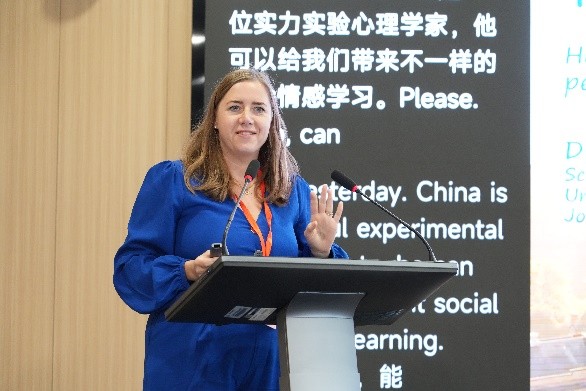
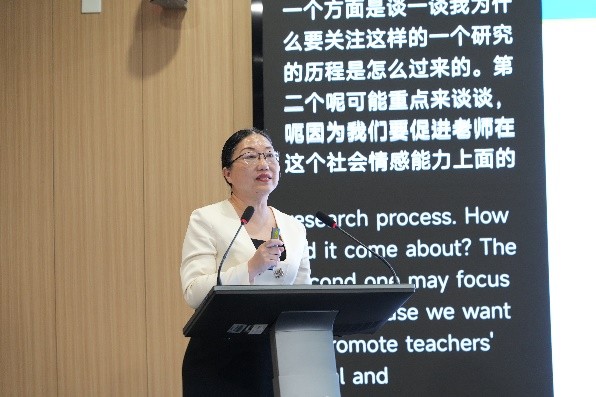
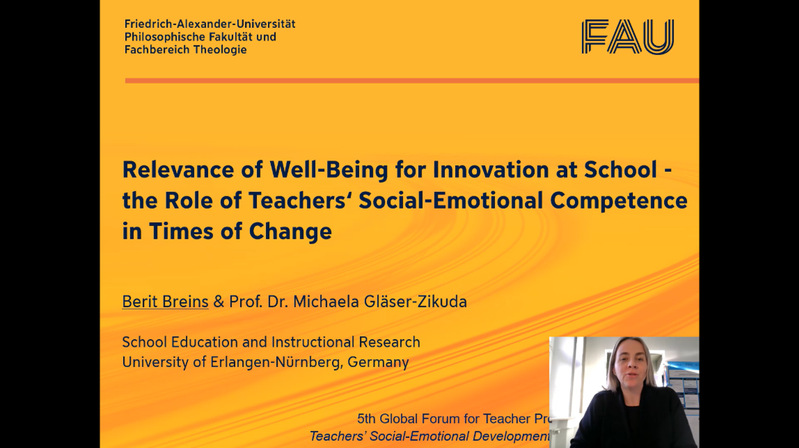
Emphasizing humanistic care and emotional literacy in education, Dr. Joanna Wincenciak shared a social-emotional learning project using puppet shows, which helps teachers integrate social-emotional development education within 5–10 minutes daily through ready-to-use activity scripts and forms a community of practice for teachers to spread spontaneously. Dr. Berit Breins pointed out that teachers’ well-being and autonomy are the psychological foundation for stimulating educational innovation, calling for the deep integration of social-emotional development into teachers’ professional development systems. Professor Wu Weidong systematically elaborated on the connotation of "teachers’ emotional literacy" including four dimensions—internal foundation, interpersonal interaction, teaching practice, and sustainable development—and proposed promoting the transformation of teaching from "knowledge transmission" to "personalized growth support integrating cognition and emotion" with "empathic teaching design" as the core.
Participants unanimously agreed that facing the profound transformation of the educational system, strengthening international cooperation, promoting teacher capacity building and institutional innovation are crucial to achieving the sustainable development goals of global education.
Text Contribution: Chen Yuling
Photo Contribution: UNESCO Teacher Education Centre (TEC)