

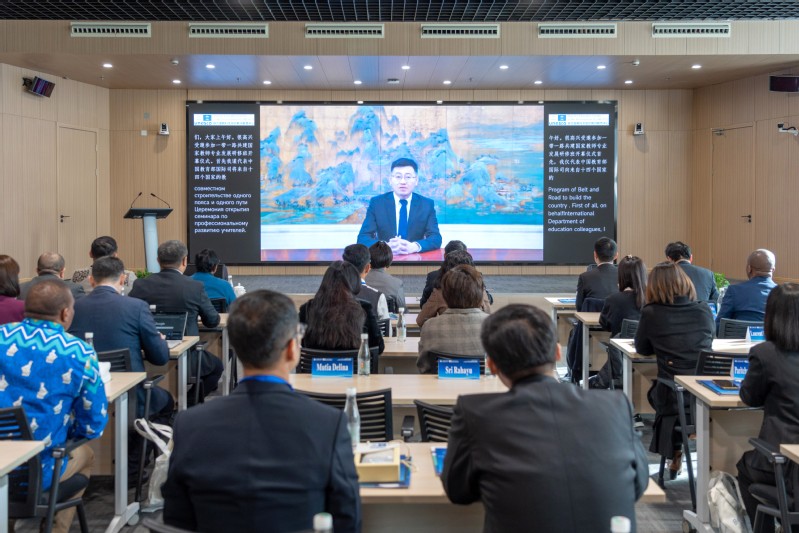
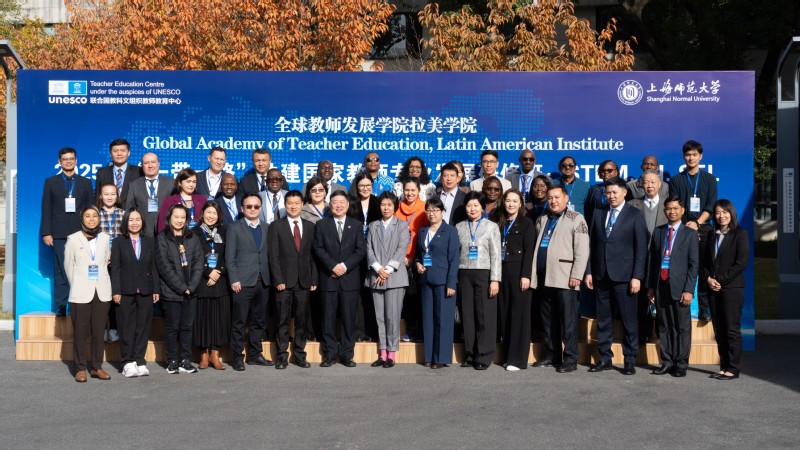
On the morning of November 28, 2025, the Belt and Road Exchange Project 2025 Autumn Session successfully opened at the UNESCO Teacher Education Centre (TEC). The project was guided by the Department of Teacher Education of the Ministry of Education, the Department of International Cooperation and Exchanges of the Ministry of Education and the Shanghai Municipal Education Commission, and hosted by TEC, Shanghai Normal University and the Global Academy of Teacher Education, Latin American Institute. Zhao Lei, Deputy Director-General of the Department of International Cooperation and Exchanges of the Ministry of Education, delivered a video address. Professor Zhang Minxuan, Director of TEC, Chen Hao, Deputy Director of the International Exchange Division of the Shanghai Municipal Education Commission, Xiao Shengxiong, Director of the International Affairs Office of Shanghai Normal University, and Professor Hu Guoyong, Deputy Director of TEC, attended the opening ceremony.
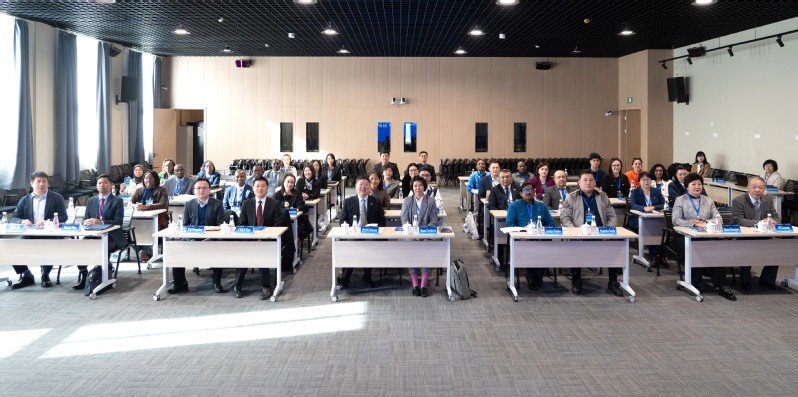
The project themed "Professional Development for Secondary and Primary Educators" focused on key topics including TALIS, STEM teachers, teachers and AI, and teachers' social-emotional competence, aiming to boost teacher professional development and international cooperation. A total of 40 educational officials, teacher educators, experts, scholars, and primary and secondary school teachers from 14 countries participated in the project, gathering in Shanghai to exchange ideas on primary and secondary school teachers' professional development. The opening ceremony was hosted by Professor Hu Guoyong, Deputy Director of TEC.
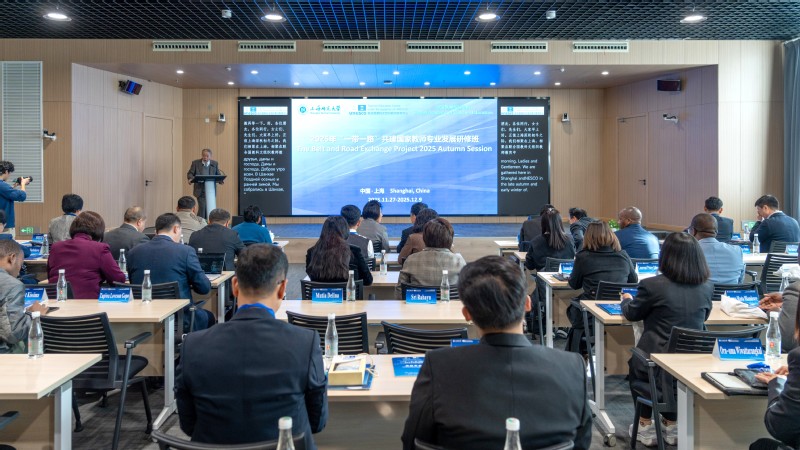
Zhao Lei, Deputy Director-General of the Department of International Cooperation and Exchanges of the Ministry of Education, delivered a video address first. He extended a sincere welcome to educational colleagues from 14 countries, noting that educational cooperation is an important part of jointly building the Belt and Road Initiative (BRI) and enhancing people-to-people bonds. He expressed hope that China's educational practices could provide useful references for the world, especially developing countries.
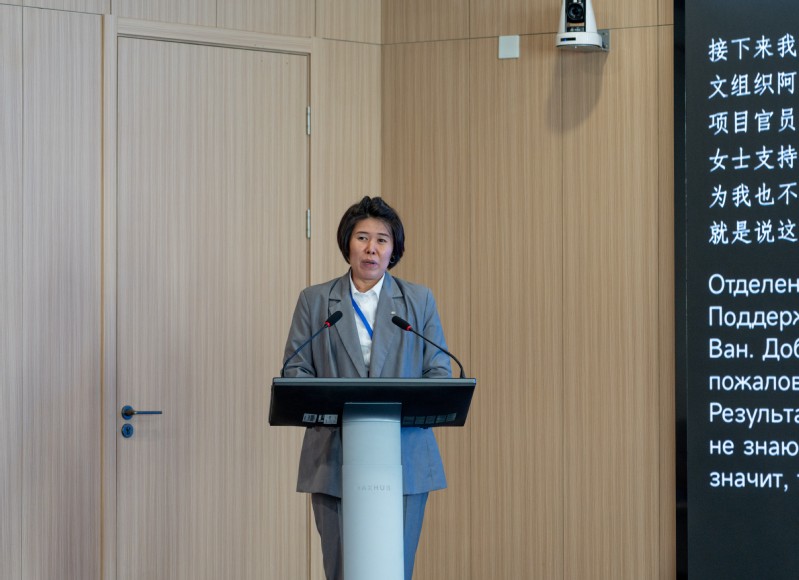
Subsequently, Dinara Tuyakova, Programme Officer of the UNESCO Office in Almaty, delivered an address. She thanked the project for providing an excellent platform for regional cooperation, pointing out that teachers are central to educational transformation and the achievement of Education for Sustainable Development goals, and expressed expectations for further educational cooperation and the building of professional networks.
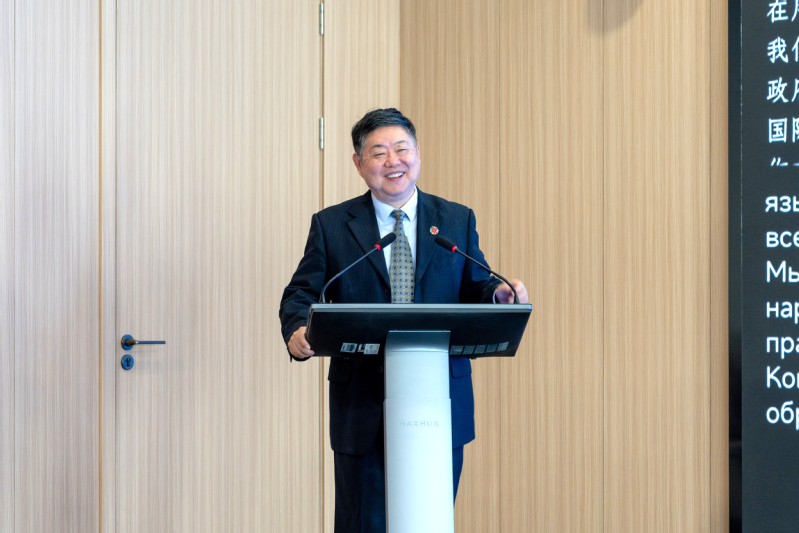
Finally, Professor Zhang Minxuan, Director of TEC, addressed the ceremony. Starting from a historical perspective, he vividly recounted the origin of the BRI and emphasized its profound significance for cultural exchanges, trade and personnel mobility. Taking China's leap from backwardness to rapid development in education as an example, he encouraged program participants to strengthen confidence in educational development, and hoped that this late-autumn project would bring them gains as fruitful as spring ploughing.
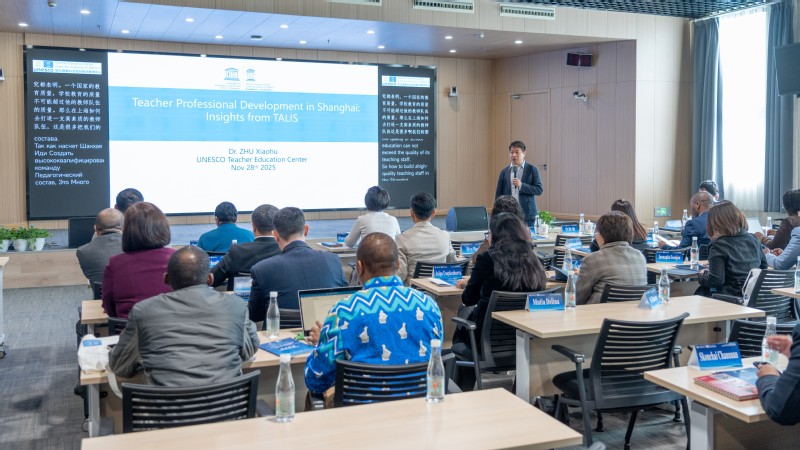
In the keynote speech session, Associate Professor Zhu Xiaohu from TEC and Mr. Mon Munint, Director of the Teacher Education Department of the Ministry of Education, Youth and Sport of Cambodia, delivered keynote speeches respectively.
Associate Professor Zhu Xiaohu gave a keynote report titled "Teacher Professional Development in Shanghai: Insight from TALIS". He elaborated on the overview of education in Shanghai and analyzed the characteristics of Shanghai's teacher professional development system from aspects such as systematic induction training, hierarchical teaching and research networks, and teachers' career development pathways. In recent years, amid the extension of teachers' working hours, Shanghai has continuously explored AI-enabled teaching and personalized teaching approaches to maintain teachers' high teaching efficiency and professional satisfaction. During the discussion session, project participants had a lively discussion with Associate Professor Zhu Xiaohu on issues such as teachers' working hours, admission systems and teaching preparation.

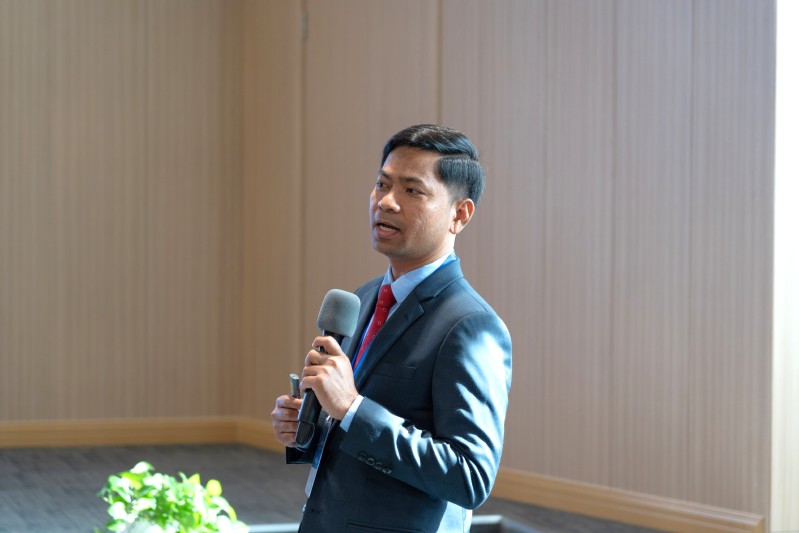
Director Munint Mon delivered a report titled "Strengthening the Foundation of Quality Education: Teacher Training Reform in Cambodia". He detailed Cambodia's teacher education reform strategy, which aims to systematically improve the quality of the teaching workforce by formulating a teacher policy action plan and professional development standards, raising teacher qualification thresholds and salaries, and comprehensively building modern teaching facilities such as smart classrooms and digital laboratories. Going forward, Cambodia plans to further deepen the reform of normal universities, actively align with international assessment standards such as PISA, and promote educational digitalization, laying a solid talent foundation for realizing national development vision.
The project will run until December 9, featuring diverse activities including thematic seminars, school visits, museum tours, technology enterprise visits and cultural experiences. It will present a holistic picture of Shanghai's education ecosystem to participants, aiming to promote the exchange of educational experiences among educators from BRI partner countries and advance knowledge sharing and international cooperation in education.
Photos and Text: UNESCO Teacher Education Centre