


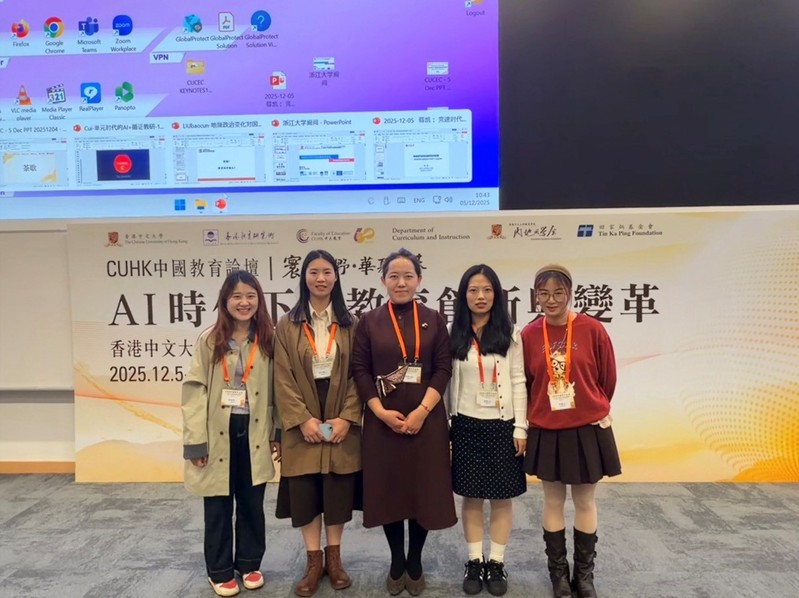
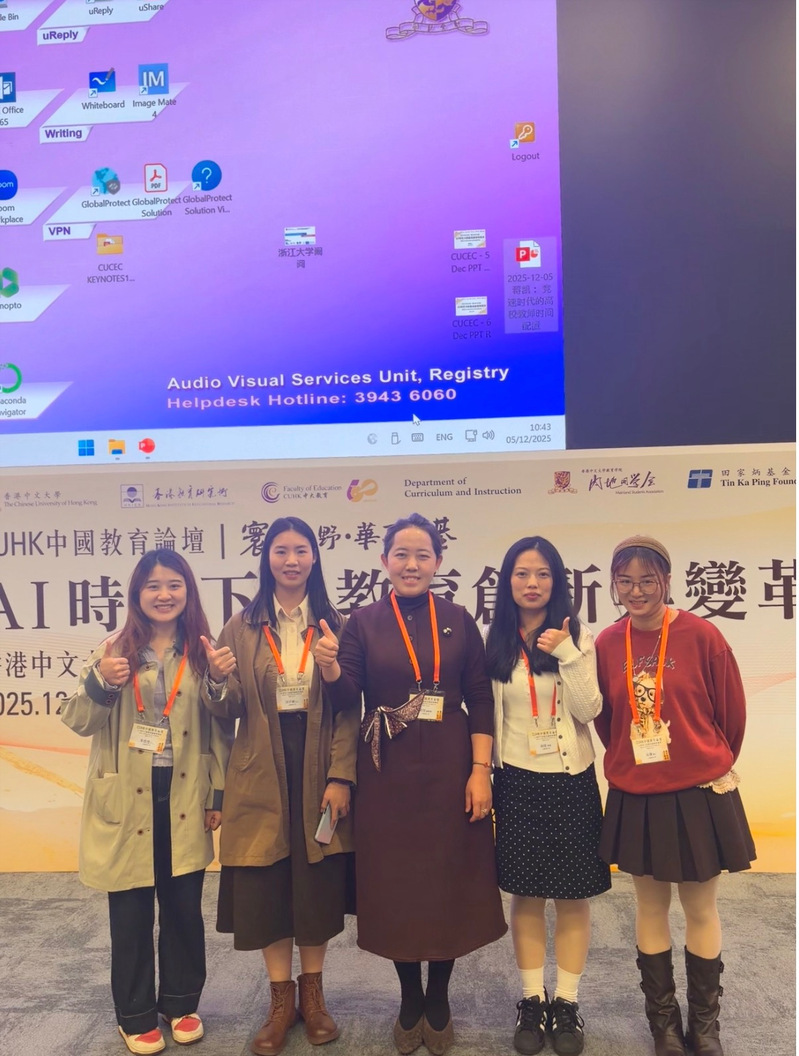
From December 4 to 6, 2025, faculty and students from the UNESCO Teacher Education Centre (TEC) went to the Chinese University of Hong Kong (CUHK) to attend the CUHK China Education Forum and the Seminar Celebrating the 60th Anniversary of the Faculty of Education. The seminar, themed "Educational Innovation and Transformation in the AI Era", featured 10 keynote speeches, 23 thematic forums, 23 parallel forums and 2 poster sessions. Associate Professor Song Jia, PhD Candidates Hou Jia and Wu Qian, as well as Master Students Li Yingying and Liu Zijing from TEC attended and delivered speeches.
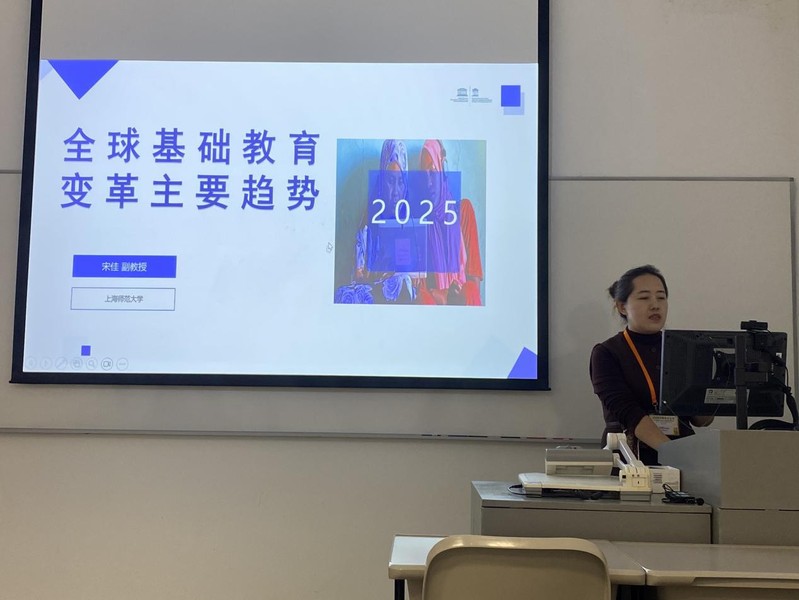
Associate Professor Song Jia gave a report titled "Global Trends in Basic Education Transformation in the AI Era" at a parallel forum. Based on bibliometric analysis of policy initiatives and practical actions in basic education launched by international organizations and countries worldwide in 2025, she summarized ten major trends of global basic education transformation in the AI Era. She also shared insights on key areas including humanism in basic education, curriculum reform, educational assessment and teacher development in the AI context.
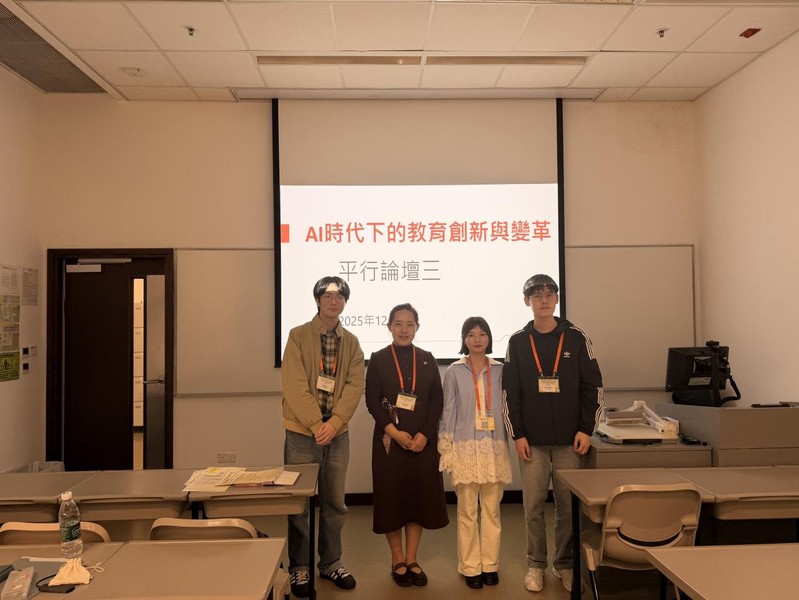
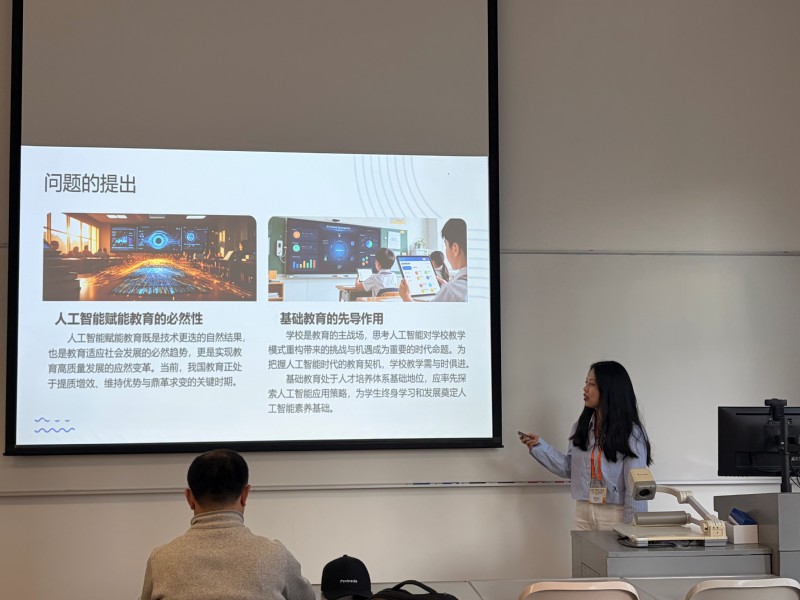
Hou Jia, a Grade 2024 PhD Candidate, delivered a report titled "Actions and Reflections on the Application of AI in Teaching in US Basic Education" at a parallel forum. Through analyzing policies and practices across US states, she found that US basic education responses to artificial intelligence include reshaping the connotation and goals of talent cultivation, restructuring training content and pathways, building a new ecosystem of teaching resources, and re-establishing standards for academic ethics. Drawing on US experience, she proposed that China should adopt an attitude of bold exploration while adhering to bottom lines, advance the strategic transformation of basic education, support teachers in coping with technological waves, build diversified pilot mechanisms, and uphold the comparative advantages of China’s basic education.
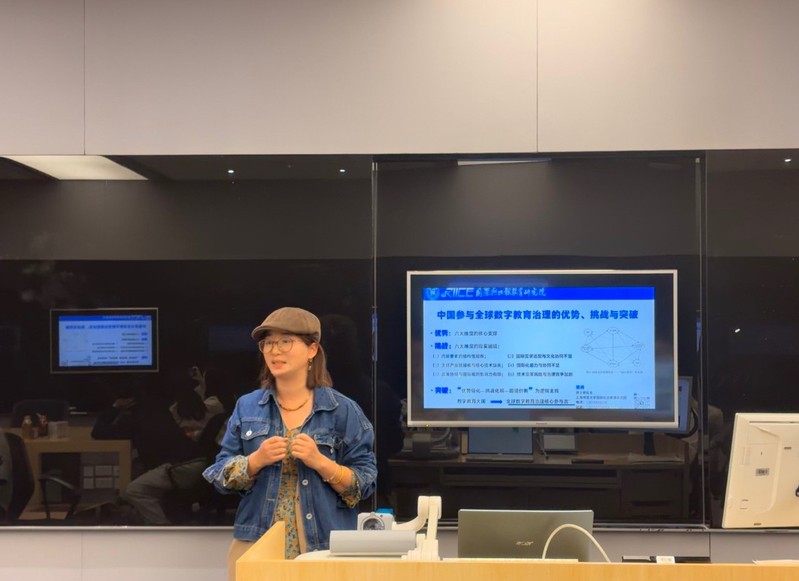
Wu Qian, a Grade 2025 PhD Candidate, presented a report titled "Advantages, Challenges and Countermeasures of China’s Participation in Global Digital Education Governance" at a sub-forum. Based on the theory of national competitive advantage, she systematically discussed the advantages and challenges of China’s participation in global digital education governance from six dimensions: production factors, market demand, related industry support, corporate strategy and competition landscape, opportunities, and government role. Following the logic of "consolidating advantages - addressing challenges - innovating paths", she put forward countermeasures for China to transform from a major digital education country into a core participant in global digital education governance.
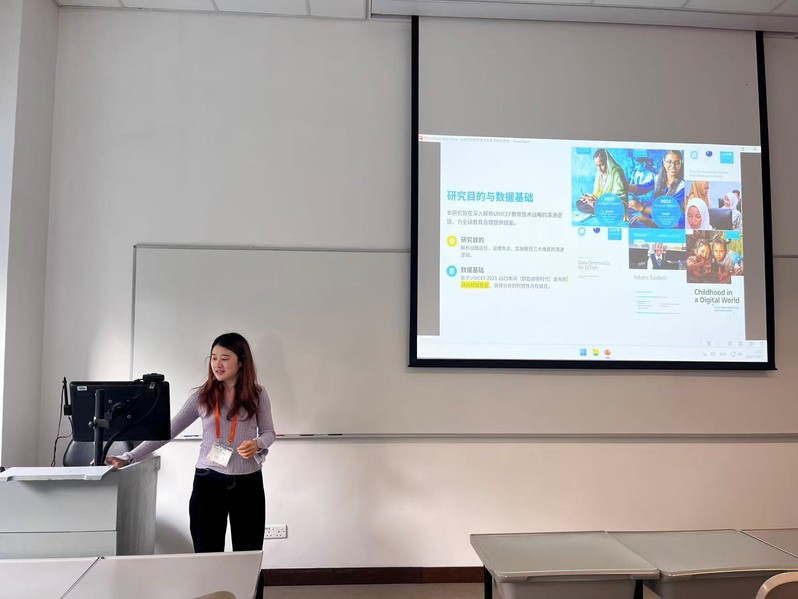
Li Yingying, a Grade 2023 Master Student, gave a report titled "Evolution and Challenges of UNICEF’s Education Technology Strategy: From the Perspective of Global Data Governance" at a parallel forum. Against the backdrop of the global digital transformation of education which has widened the digital usage gap and increased data governance risks, UNICEF has released a series of education technology strategy reports. By analyzing their evolutionary logic, governance priorities and practical pathways, the report aims to provide references for the construction of China’s education technology data governance system.
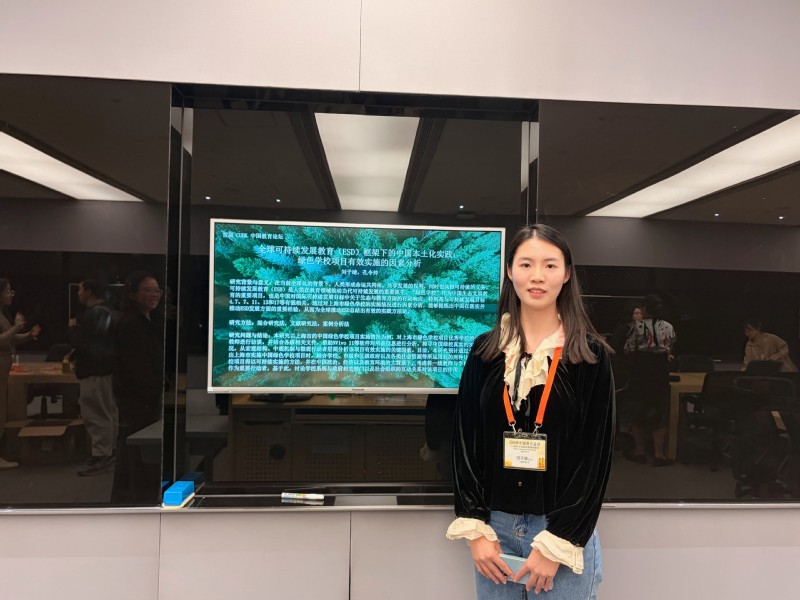
Liu Zijing, a Grade 2023 Master Student, delivered a report titled "Localized Practices of China under the Global ESD Framework: An Analysis of Factors for the Effective Implementation of Green School Programs" at a sub-forum. Against the backdrop of the global Sustainable Development Goals, the report conducted an empirical study on the localized practices of Education for Sustainable Development (ESD) in China, and shared conclusions from the perspectives of macro structure, meso mechanism and micro actors.
Photos and Text: Research Institute for International and Comparative Education (RIICE)