

From November 17 to 20, 2025, the Seminar on Cross-Cultural Professional Development of Mathematics Teachers, hosted by the UNESCO Teacher Education Centre (TEC), was successfully convened. Chaired by Professor Huang Xingfeng from TEC, the seminar centered on the core theme of mathematics teachers' professional development from a cross-cultural perspective. It gathered renowned scholars from various countries, including Professor Alexander Karp from Columbia University of the United States, Professor Huang Rongjin from Middle Tennessee State University of the United States, Professor Gabriele Kaiser from the University of Hamburg of Germany, and Professor Despina Potari from the University of Athens of Greece, as well as faculty and student representatives from the International Teacher Education Centre of Shanghai Normal University. Through diverse forms such as academic presentations, paper reviews, thematic seminars and cultural exchanges, it built an international platform for academic dialogue and experience sharing.
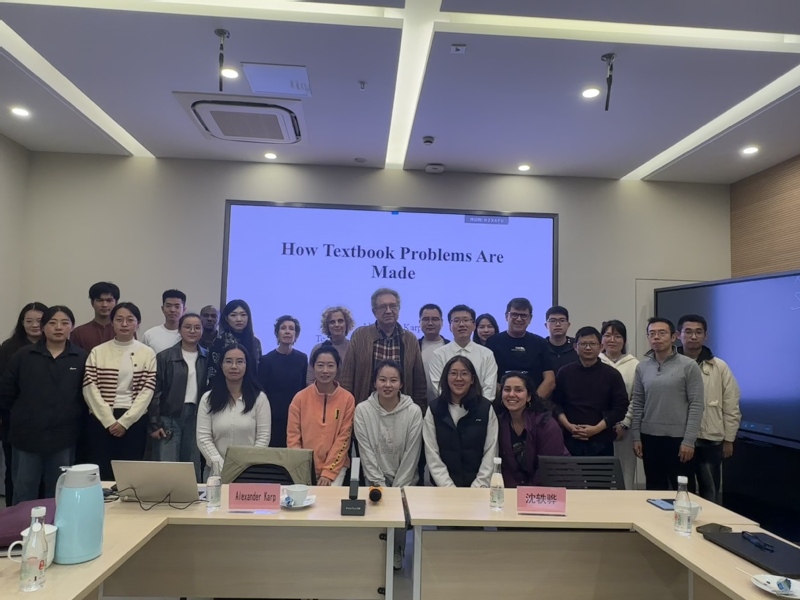
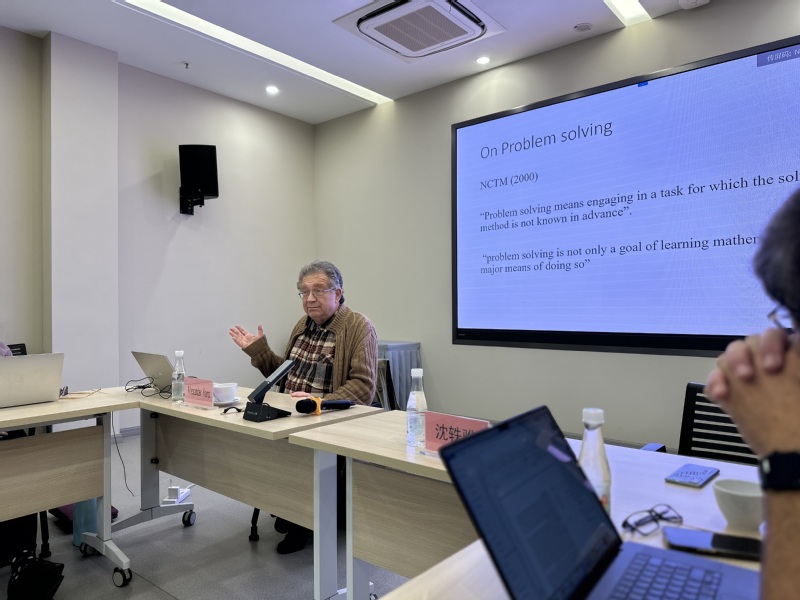
Spanning four days, the seminar featured a compact and rich agenda, covering both in-depth interpretation of cutting-edge theories and detailed analysis of practical cases. On the morning of November 17, Professor Karp kicked off the seminar with an academic report titled "How Textbook Problems Are Made?" Taking specific textbooks and exercise collections as examples, he conducted an in-depth analysis of the structural characteristics, composition logic and compilation skills of mathematics textbook exercises, breaking the traditional cognitive limitation of prioritizing problem-solving over problem-designing and providing new insights for teachers to improve their problem-designing capabilities. After the report, scholars including Professor Kaiser, Professor Potari and Professor Huang Rongjin engaged in a heated Q&A session with on-site faculty and students on integrating exercise compilation into teaching practice, creating a lively atmosphere.
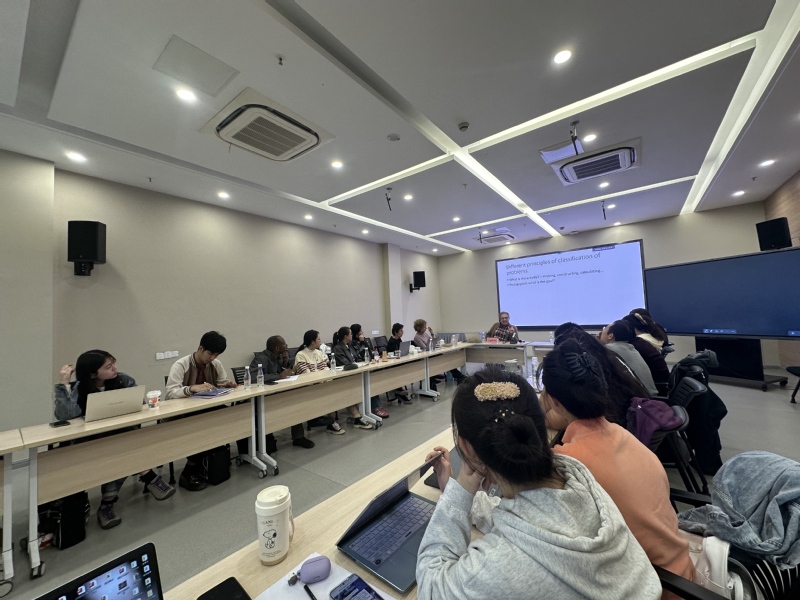
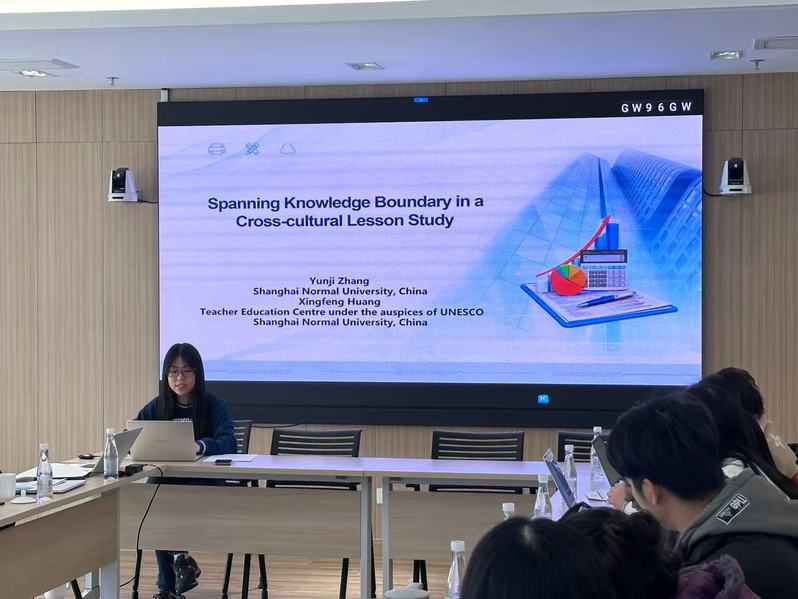
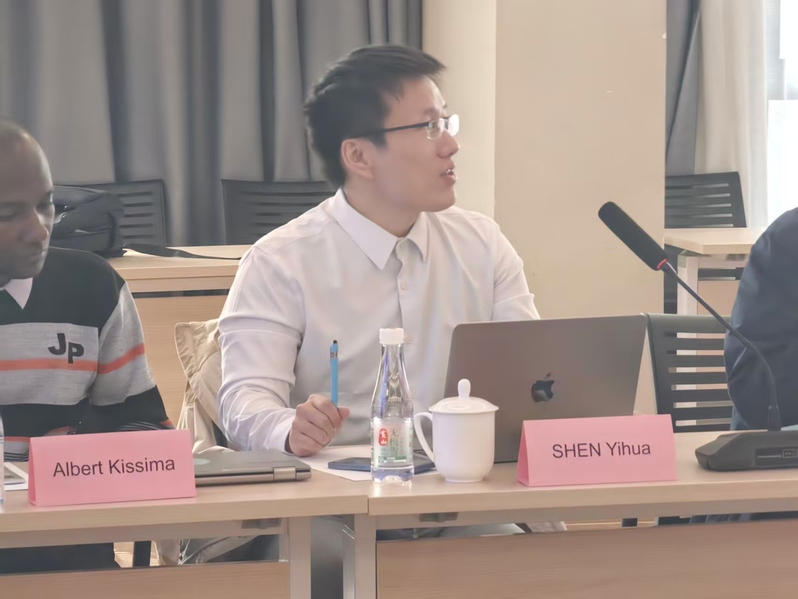
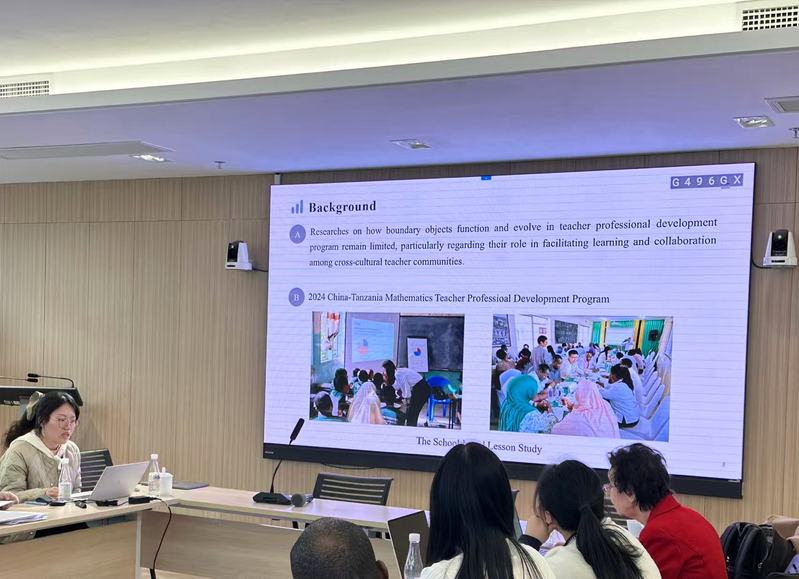
Academic exchanges on November 18 focused on core issues in cross-cultural lesson study. PhD Candidate Zhang Yunji shared his research findings themed "Knowledge Boundary Spanning in a Cross-Cultural Community", exploring paths and strategies for knowledge integration among teachers from different cultural backgrounds. Dr. Shen Yihua delivered a report titled "Teachers’ Praxeologies’ Growth in a Cross-Cultural Lesson Study", revealing the driving role of iterative lesson study in teachers' professional development based on the Anthropological Theory of the Didactic. Master Student Cheng Jialei presented a report titled "Boundary Objects in a Cross-Cultural Community", elaborating on the bridging role of boundary objects in facilitating cross-cultural teaching exchanges. Each session was equipped with dedicated discussion sessions, where participating experts, faculty and students conducted in-depth discussions on research methods and theoretical applications, sparking intellectual inspirations.
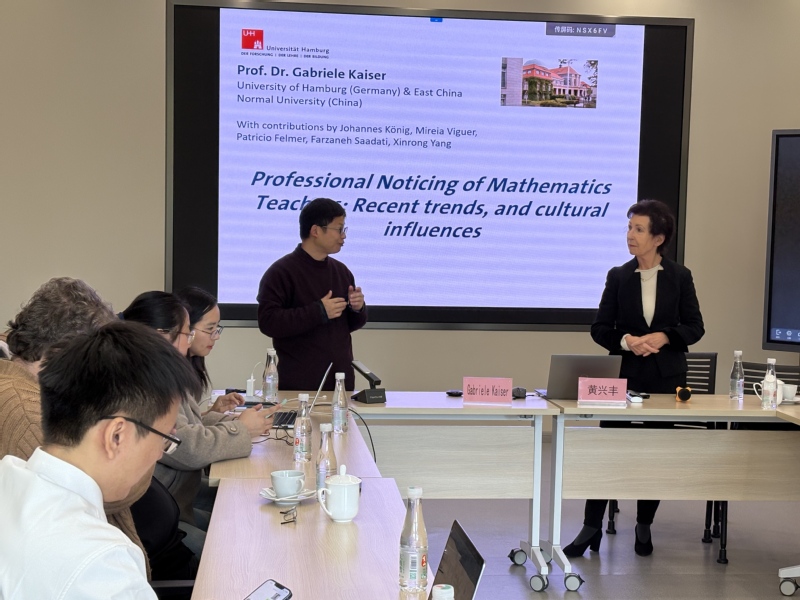
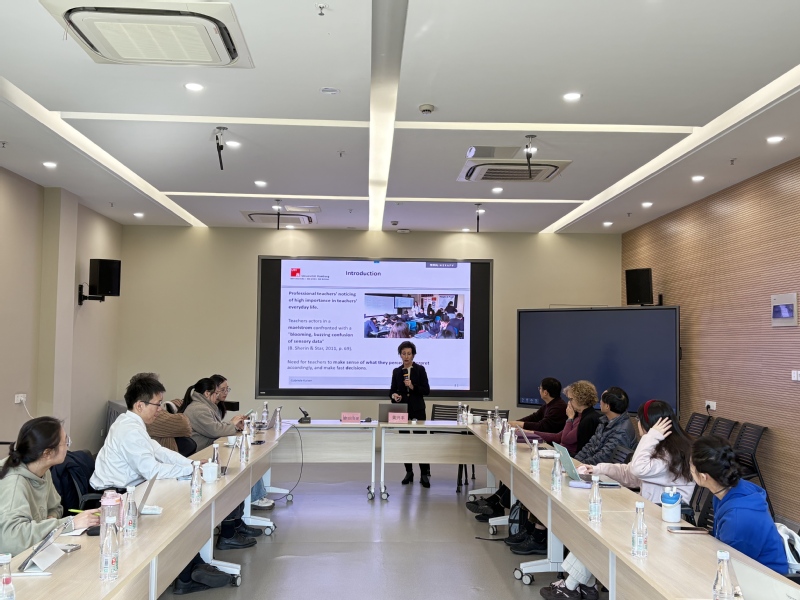
On November 19, Professor Kaiser gave a report titled "Professional Noticing of Mathematics Teachers: Recent Trends, and Cultural Influences". Based on the latest literature review on mathematics education, the report systematically reviewed the research progress of teachers' professional noticing, shared empirical research findings on promoting the development of noticing capabilities among pre-service and in-service teachers, and deeply analyzed the influence mechanism of cultural factors on teachers' noticing through comparative research cases from China, Germany and Chile, providing important theoretical support for cross-cultural teacher training. During the Q&A session after the report, Professor Kaiser and many on-site experts answered questions from online and offline participants and conducted in-depth discussions on research expansion directions.
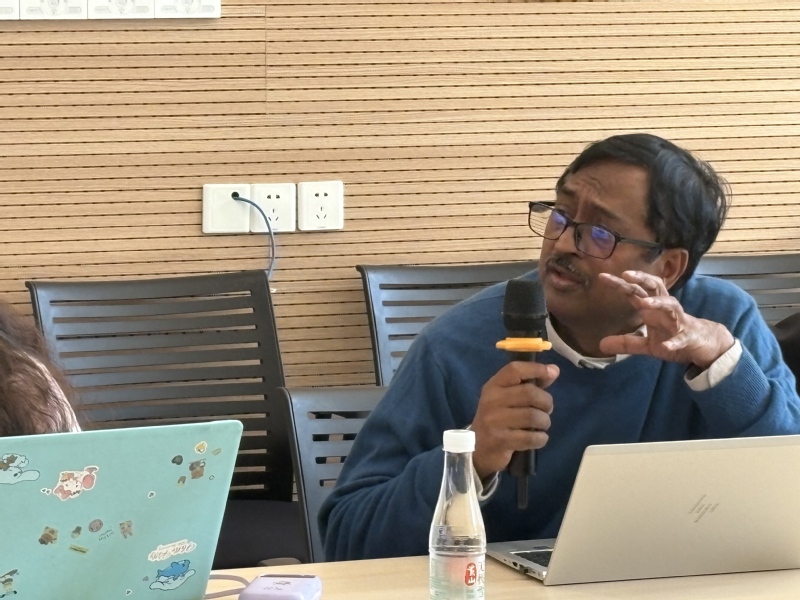
On November 20, the seminar focused on paper revision and outcome consolidation. Scholars including Professor Potari, Professor Huang Rongjin and Professor Huang Xingfeng held thematic seminars on paper revision, offering systematic revision suggestions from dimensions such as research approaches, theoretical frameworks and academic expressions. Later, PhD Candidates Albert Kissima and Jirawat Tantanon co-delivered a report titled "Mathematics Teacher’s Didactic Practices in a Cross-Cultural Lesson Study from a Variation Theory", exploring effective strategies to deepen the understanding of mathematical concepts through variation teaching, which aroused widespread resonance among on-site faculty and students and drew a successful close to the seminar.
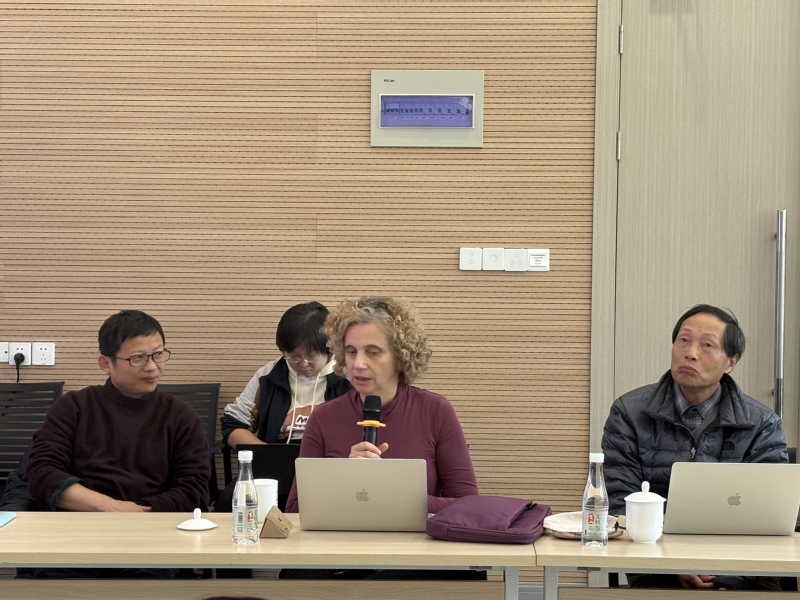
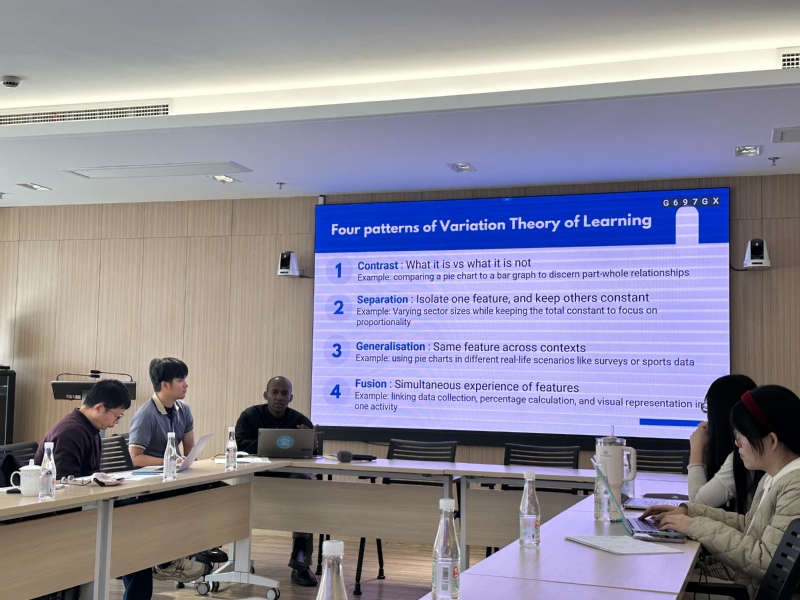
During the seminar, Chinese and foreign experts not only delivered high-level academic reports but also fully engaged in paper reviews and discussions throughout the process, providing professional guidance for online and offline faculty and students and sharing practical experience around core themes, injecting new vitality into international exchanges in mathematics education. The successful convening of the seminar built a bridge for communication between Chinese and foreign mathematics education research and practice, helping participating faculty and students broaden their horizons and achieve growth. The UNESCO Teacher Education Centre (TEC) will continue to advance cross-cultural exchanges and cooperation, contributing to the professional development of mathematics teachers worldwide.
Text by Sun Zhihua
Photos by UNESCO Teacher Education Centre (TEC)