

On January 5, 2026, the UNESCO Teacher Education Centre (TEC) kicked off its first event of the new year — the Hong Kong STEAM Education Leaders Exchange Program. Co-hosted by the Education Bureau of the Government of the Hong Kong Special Administrative Region (HKSAR Government Education Bureau) and TEC, the program aims to promote in-depth exchanges and cooperation in STEAM education between Shanghai and Hong Kong, and jointly address the talent cultivation challenges in the AI era.
The program’s opening ceremony was held successfully on the afternoon of the same day at TEC’s Shicheng Lecture Hall, hosted by Professor Hu Guoyong, TEC’s Deputy Director. Attendees included Mr. Chan Siu-chuen, Chief Curriculum Development Officer (Mathematics), Ms. Lee Chun-man, Chief Curriculum Development Officer (Science), and Ms. Fan Hui-yee, Curriculum Development Officer (Technology Education) from the HKSAR Government Education Bureau; Professor Zhang Minxuan, Director of TEC, Professor Hu Guoyong, and Distinguished Professor Jordan Naidoo; as well as 32 principals and teachers from primary and secondary schools in Hong Kong.

Opening the proceedings with his address, Professor Zhang Minxuan noted that the development of both Shanghai and Hong Kong carries profound significance for China. Currently, Shanghai is not only home to TEC, a UNESCO Category Ⅱ Institute, but also houses the UNESCO International Institute for STEM Education (IISTEM), a Category Ⅰ Institute. This layout fully demonstrates China’s vision and responsibility of actively absorbing all outstanding achievements of human civilization while proactively contributing to global educational development. He expressed hope that all participating teachers would return with fruitful gains from the program, and that TEC would join hands with colleagues in Hong Kong’s education sector to nurture new generations for the times, serving national development and human progress.
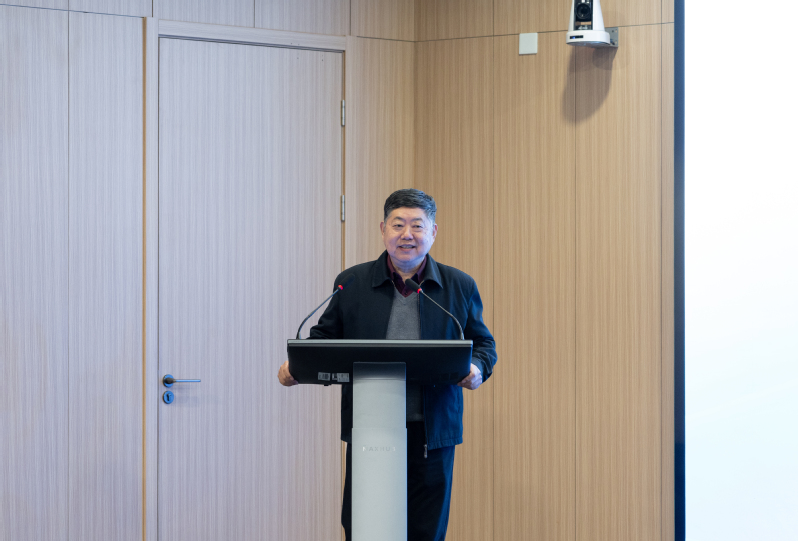
Mr. Chan Siu-chuen stated in his speech that Shanghai’s systematic advancement and innovative practices in STEAM education are of great reference value. He hoped that Hong Kong’s educators would not only learn specific methods through this training, but also understand the underlying educational concepts and implementation logic, thereby promoting the development of Hong Kong’s STEAM education to a higher level.
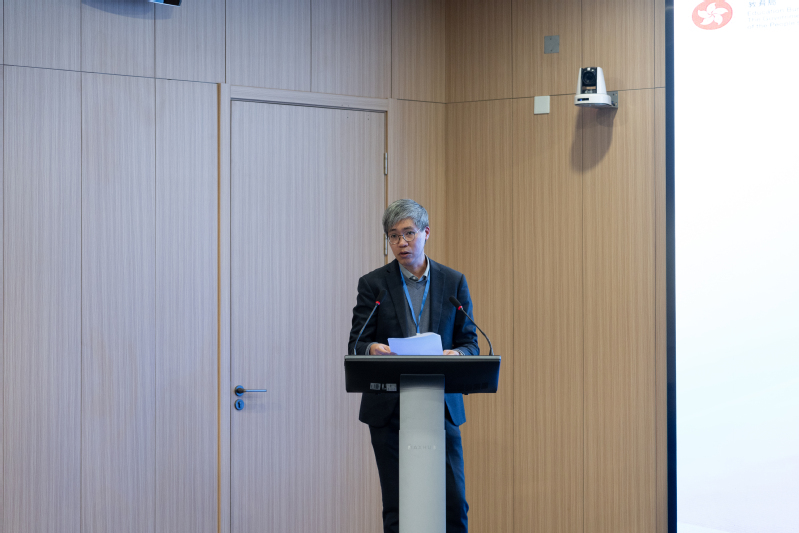
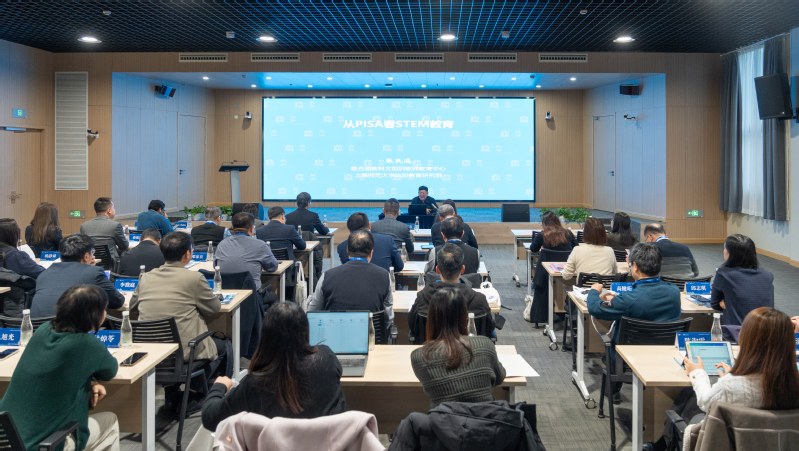
Right after the opening ceremony, Professor Zhang Minxuan gave a lecture to the participants titled STEM Education Through the Lens of PISA. He looked back on the remarkable achievements Shanghai has attained since its first participation in PISA in 2009, pointing out that these accomplishments are a testament to the region’s sustained efforts to advance equity and quality in basic education. Professor Zhang emphasized that STEM education is not simply the integration of science, technology, engineering, and mathematics disciplines. Instead, it represents an educational paradigm centered on procedural knowledge, interdisciplinary competencies, and innovative literacy. Against the backdrop of educational transformation driven by AI, he proposed that curricula and teaching methods should shift to a competency-oriented model. He also called for stepped-up iterative upgrading of experimental teaching and the development of a learning environment that moves away from “verification experiments” toward “innovative experiments.”
The program features a range of activities, including expert lectures, school visits, tours of unique venues, and thematic seminars. Participants will visit primary and secondary schools as well as science popularization venues in Shanghai to observe firsthand practices in STEAM curriculum implementation, laboratory development, and teaching evaluation, while exchanging in-depth insights with local education professionals. This program will strengthen a collaborative platform for innovation and resource sharing between Shanghai and Hong Kong. Beyond enhancing educational quality in both regions, it will contribute to China’s educational modernization and knowledge dissemination across the world.
Photos and Text: UNESCO Teacher Education Centre (TEC)